


 All games
 Jackpot
 Live casino
 Fishing
 Cards and arcade
 Lottery 2D/3D
 VIP
 WavePay
 Deposit
 Withdrawal
 Mobile app
 APK guide
 Service address
Three-digit rules: why the count can be 1,000, 810 or 720
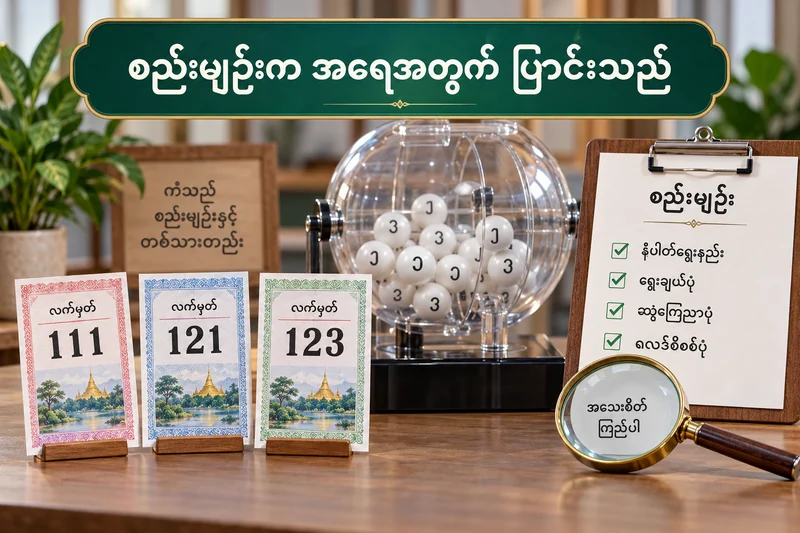
A three-digit label does not tell you how many outcomes the draw can produce. The answer changes when repeated digits are allowed, only adjacent repeats are excluded, or every digit must differ. Before using “one in 1,000”, identify the outcome-generation rule rather than just the purchase menu.
Three models, three different sample spaces
The examples here use digits 0–9, allow a leading zero, require the exact order, and produce one winning sequence. Within each model, every allowed sequence is equally likely. These are hypothetical mechanisms, not verified A80 draw rules or a prediction of a real result.
| Generation rule | Possible sequences | One valid sequence |
|---|---|---|
| All repetitions allowed | 10 × 10 × 10 = 1,000 | 1/1,000 = 0.1% |
| No adjacent repeated digit | 10 × 9 × 9 = 810 | 1/810 ≈ 0.1235% |
| All three digits different | 10 × 9 × 8 = 720 | 1/720 ≈ 0.1389% |
In the second model, the third digit must differ from the second, but it may equal the first. That leaves nine choices for the third position, not eight. In the third model, two already-used digits are excluded at the final position, leaving eight.
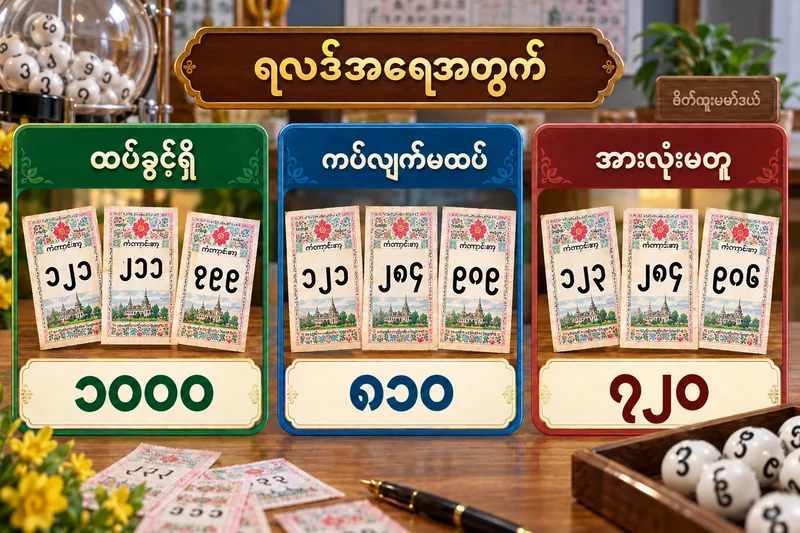
Use 121, 112 and 284 to test the wording
Sequence 121 fits the first two models because its adjacent digits differ; it fails the all-distinct model. Sequence 112 has an adjacent repeat and fits only the first model. Sequence 284 fits all three. Sequence 000 fits only the unrestricted model. These concrete checks can reveal an ambiguous phrase such as “no repeated numbers” before any arithmetic is applied.
Keep the exact position rule in the record. An unordered selection of three digits would be a different question. The A80 lottery hub introduces 2D and 3D formats; the counts on this page refine the assumptions behind a three-position model.
A purchase restriction alone does not change the draw
Suppose the actual hypothetical draw still generates all 1,000 sequences, but a seller refuses orders containing adjacent repeated digits. An accepted 121 still has probability 1/1,000, not 1/810. The seller has reduced the list of purchasable selections, not the set of possible winning results. A forbidden purchase can still be generated by that draw.
The 810 denominator applies only if the outcome mechanism itself excludes adjacent repeats and samples uniformly from the remaining 810 sequences. Treat an unavailable button, a form-validation error and a documented draw rule as separate evidence. None can substitute for the other.
Count the sequences yourself
A small audit is reproducible without placing a bet. Enumerate each value from 000 through 999 as a three-character string. Keep every row for the first model. For the second, keep a row only when digit 1 differs from digit 2 and digit 2 differs from digit 3. For the third, keep it only when the set of its digits has size three. The resulting counts are 1,000, 810 and 720.
This enumeration checks the model’s combinatorics. It does not test a provider’s random generator, prove that its outcomes are uniform, or confirm which model a specific game uses. Preserve leading zeros in a text column; a spreadsheet that converts 007 to 7 silently changes the representation.
More favorable odds are not a profit conclusion
With 10 distinct valid selections in one draw and exactly one winning sequence, the model probabilities are 10/1,000, 10/810 and 10/720: 1%, about 1.2346% and about 1.3889%. This assumes the 10 selections are accepted and distinct within the relevant model. Ten copies of the same selection cover one outcome.
Cost, gross payout, prize sharing and settlement rules are separate inputs. A smaller sample space is insufficient to compare expected profit if those inputs differ. Read the odds-to-probability guide for a separate price-versus-probability example, and set a personal limit before making any paid decision.
What to retain when the rule is unclear
Save the game’s name and version, the exact rule text, whether leading zeros are allowed, the order requirement and the source date. Ask the published support channel which sequences the draw can actually generate. If that answer cannot be verified, report the calculation as conditional rather than choosing the most attractive denominator.
OpenStax’s probability terminology explains outcomes, events and sample spaces. The three mechanisms, enumeration and examples above are our own teaching models; the source does not describe A80’s games. Sources and arithmetic reviewed 6 October 2026. This article is an AI-assisted editorial explanation, with no confirmed named human reviewer and no live-play test.